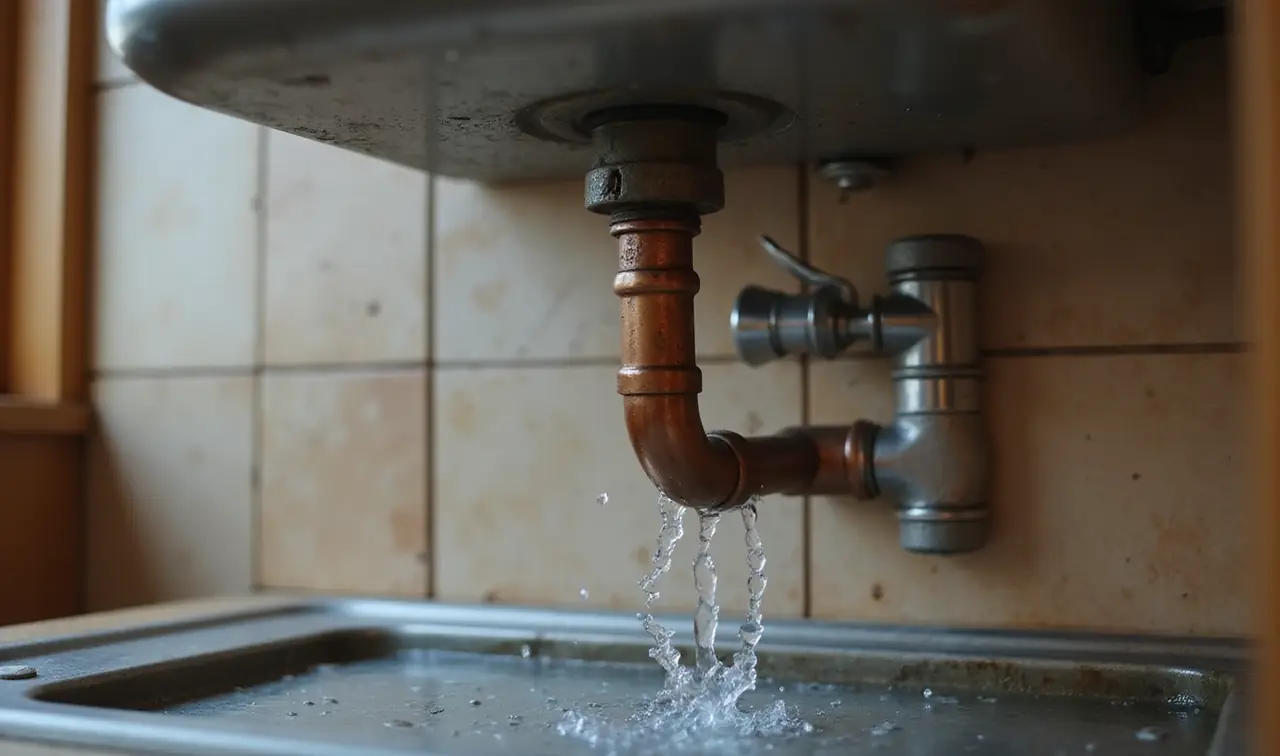
Homeowners insurance usually covers a burst pipe when the break is sudden and accidental, and it usually pays for the resulting water damage to your home, but not for the failed pipe itself when the cause is neglect or long-term leaking. In Layton, where a hard freeze can split a line overnight, that sudden-and-accidental test is the one that decides most claims. This post covers what typical policies cover, what they exclude, and what to do first so a claim goes smoothly.
Policies differ, so your own policy language and your insurance company have the final word.
Does homeowners insurance cover burst pipes?
Standard homeowners insurance (the HO-3 policy most Utah homeowners carry) generally covers burst pipes when the water damage is sudden and accidental, such as a frozen line that cracks and floods a room. It covers the damage the water causes to floors, walls, ceilings, and belongings.
Burst pipe water damage is damage caused by a pressurized supply or drain line that fails and releases water into the structure, and it is one of the most common winter losses in Davis County. A crew handling Burst Pipe Water Damage in Layton sees it every cold season.
The pipe itself, the part that broke, is often not what the policy pays to replace. The cost to repair the cause usually falls to you, while the resulting damage is the covered part.
What does a typical policy cover after a pipe bursts?
A typical homeowners policy covers the resulting damage from a burst pipe in four areas: the structure, your belongings, temporary living costs, and in many cases the cost to tear out walls or floors to reach the break.
- Dwelling coverage: drywall, flooring, cabinets, insulation, and framing damaged by the water.
- Personal property: furniture, electronics, and clothing that got soaked.
- Loss of use: hotel or rental costs if the home is unlivable during repairs.
- Water removal and drying: the emergency steps that stop damage from spreading, often called mitigation.
That last item matters. Many policies expect you to take reasonable steps to limit the loss, and professional Water Mitigation in Layton is how that duty is usually met.
What do policies usually exclude?
Policies usually exclude damage from slow, long-term leaks, maintenance neglect, and groundwater or flood water, even when a burst pipe is involved nearby. The wording varies, but the pattern is consistent.
Common exclusions and limits:
- A leak that dripped for weeks or months behind a wall, which insurers treat as a maintenance issue.
- Damage to a vacant or unheated home where the heat was off and pipes were not drained.
- Water that enters from outside, such as a flooded yard or snowmelt seeping through a window well.
- Sewer or drain backup, which often needs a separate endorsement.
- Mold, which may be capped or limited even when the original water loss is covered.
If heat was turned off while you were away, read the vacancy and freeze sections of your policy. Insurers often expect the heat to stay on, usually at a minimum around 55 degrees, or the water system drained.
Why do pipes burst in Layton homes in winter?
Pipes burst in Layton homes in winter because water expands about 9 percent when it freezes, and the pressure between the ice and a closed valve splits the pipe. Hard freezes in December and January are the main trigger.
The vulnerable spots are predictable: exterior walls, unheated crawl spaces, garage supply lines, and the rooms over a cold carpet. Older homes from the 1970s and 1980s on Layton and Clearfield streets often have supply lines run along outside walls with thin insulation.
Canyon wind events can drop temperatures fast and make a mild forecast turn into a burst line before you wake up. This is why a homeowner in Water Damage Restoration in Clearfield and one in Layton often call about the same type of loss on the same cold morning.
What should you do first when a pipe bursts?
When a pipe bursts, shut off the main water valve first, then turn off power to wet areas if it is safe, document everything, and call for water removal before you call anyone else. Fast action keeps the damage smaller and your claim cleaner.
- Shut off the water. Find the main valve before the water spreads.
- Stay safe. If water is near outlets or the panel, stay out and keep the breaker off.
- Photograph and video the damage before moving or throwing anything away.
- Call your insurance company to open a claim and ask what they require.
- Start water removal. Standing water and wet materials should be handled quickly, because mold can start in 24 to 48 hours.
- Keep damaged items until the adjuster has seen or approved disposal.
Your claim does not have to be filed before you call for drying help. Fast Emergency Water Damage in Layton work protects the home while the paperwork catches up.
How does a burst pipe claim usually work?
A burst pipe claim usually works in three steps: you report the loss, an adjuster reviews the damage and cause, and the insurer issues payment for covered repairs minus your deductible. Timing depends on the size of the loss and how quickly documents arrive.
Your deductible, often a flat amount or a percentage of your dwelling coverage amount, is the part you pay first. Some policies set a separate wind or hail deductible, but water losses typically use the standard one.
Records speed things up. Keep photos, receipts, the drying log with moisture readings, a list of damaged items, and the plumber's note describing what failed. A moisture map and daily readings show the insurer what was wet and when it was dry.
What affects what you pay out of pocket?
What you pay out of pocket after a burst pipe depends on your deductible, the size of the loss, and whether the cause is covered. Four factors drive most of it.
- How many square feet of floor, wall, and ceiling the water reached.
- Whether the water stayed clean or sat long enough to carry bacteria.
- How many days of drying the structure needs, usually 3 to 5.
- Whether mold has started, since many policies cap mold coverage.
A short break caught within hours often stays below the deductible. A pipe that runs all night behind a finished wall rarely does.
How can you prevent frozen pipes before the next hard freeze?
You can prevent most frozen pipes in Layton by keeping the thermostat at 55 degrees or higher, insulating exposed lines, and letting a faucet drip on nights that drop into the teens. These steps cost little compared with a burst line.
- Disconnect garden hoses and shut off the outdoor spigot supply from inside.
- Open cabinet doors under sinks on exterior walls so warm air reaches the pipes.
- Seal gaps around crawl space vents and rim joists where cold air blows in.
- Know where your main shutoff is and test that it turns.
Since it is November, now is the time to walk the house, before the first deep freeze arrives off the Wasatch foothills.
Common mistakes that hurt burst pipe claims
The most common mistake that hurts a burst pipe claim is waiting to start drying. Wet drywall and carpet fail fast, and an insurer can reduce a claim for damage that grew because no one acted.
- Throwing away damaged items before photographing them.
- Making permanent repairs before the adjuster has looked.
- Ignoring a small leak until it becomes a larger loss that is called neglect.
- Leaving a house unheated in winter without draining the lines.
- Signing a contract before you understand what the policy actually pays.
A flooded finished basement adds another wrinkle. If the pipe broke upstairs and water ran down, a restoration crew handling Basement Flood Cleanup in Layton will usually document the path of the water, which helps the adjuster see the loss was sudden.
When to call a professional
You should call a professional as soon as a pipe bursts and water reaches a floor, wall, or ceiling, because drying generally takes 3 to 5 days and starts working best in the first day. A plumber fixes the pipe, and a restoration company dries and restores what the water touched.
Water Cleanup Layton connects you with an independent local restoration company that handles burst pipe losses, so water removal starts while you sort out your insurance call.
Frequently Asked Questions
Here are the questions Layton homeowners ask most often about burst pipes and insurance.